




Lower solvent reliance
Water as the main carrier helps reduce organic-solvent use and associated emission sources.
A focused exploration of water-based printing, performance verification and responsible manufacturing.
Water-based ink systems use water as the primary dispersion carrier, helping reduce reliance on organic solvents and related sources of VOC emissions. This is not a simple “zero-emission” claim: formulation, drying energy, wastewater management and chemical compliance all remain part of the system.
From 2019 to 2020, Four Corners focused on developing water-based ink printing for PVC colour film. After repeated trials and process improvements, the dedicated production line entered operation in September 2021.
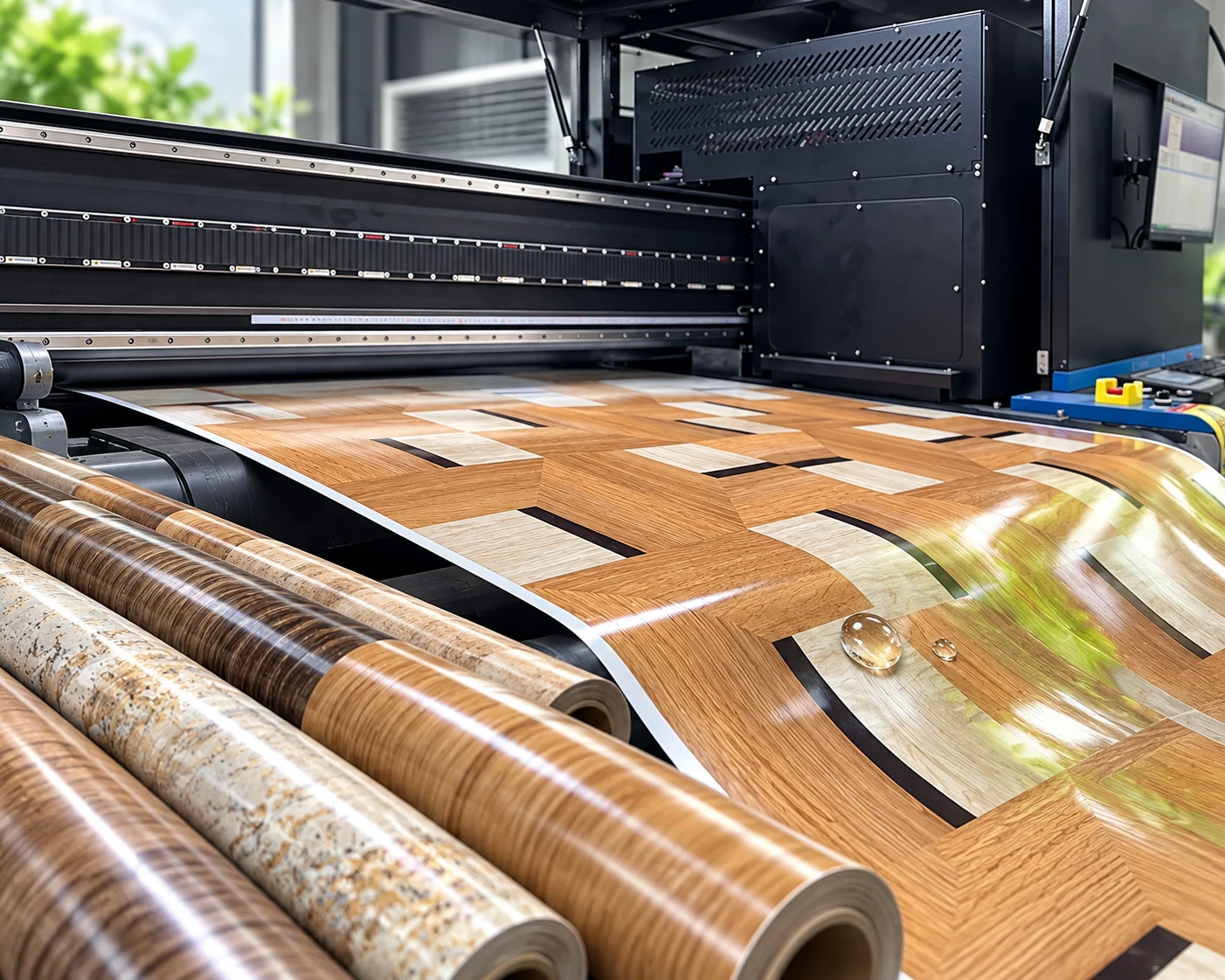
We consider the whole path from formulation and printing to use and supply-chain communication.
Water as the main carrier helps reduce organic-solvent use and associated emission sources.
Process design considers ventilation, drying, handling and workshop exposure together.
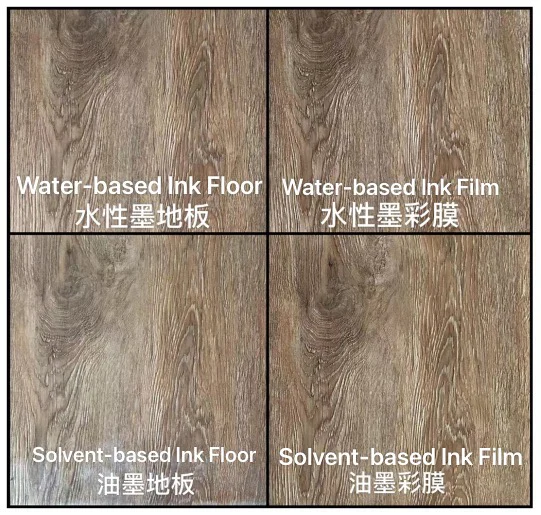
Company comparisons show brighter colour retention after pressing and clearer pattern layers than solvent-based ink film.
The supplied reports record REACH SVHC screening and environmental-label test results for water-based ink film.
The supplied test materials compare water-based and solvent-based colour films after 300 hours of UV exposure. Both recorded colour differences below 8, while the water-based samples had a lower average value.
The following figures come from the technical material supplied by Four Corners. Values should be read together with the test method, sample and report scope.
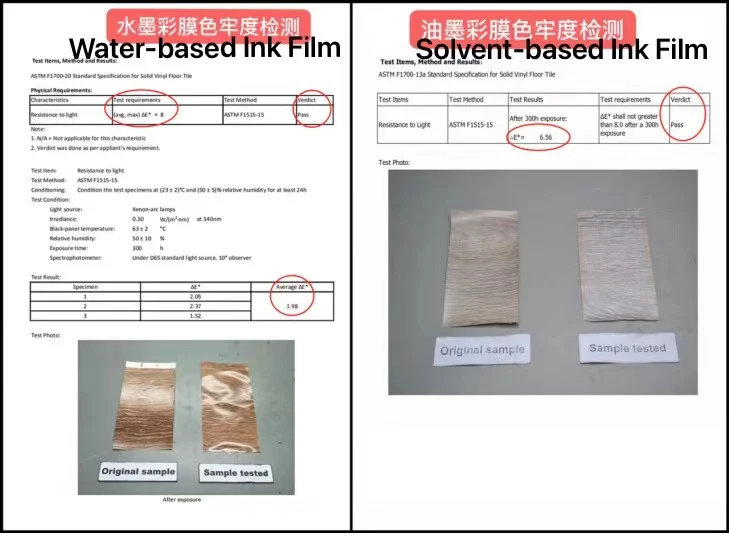
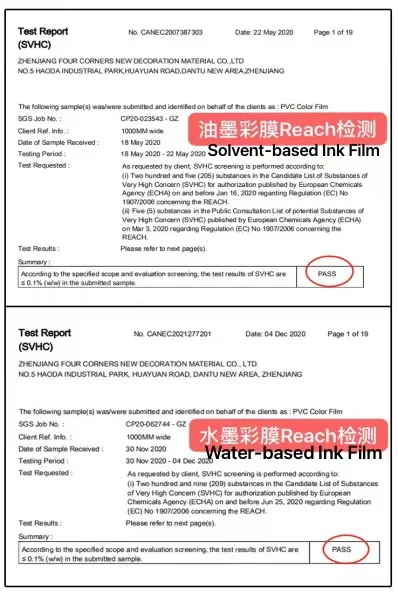
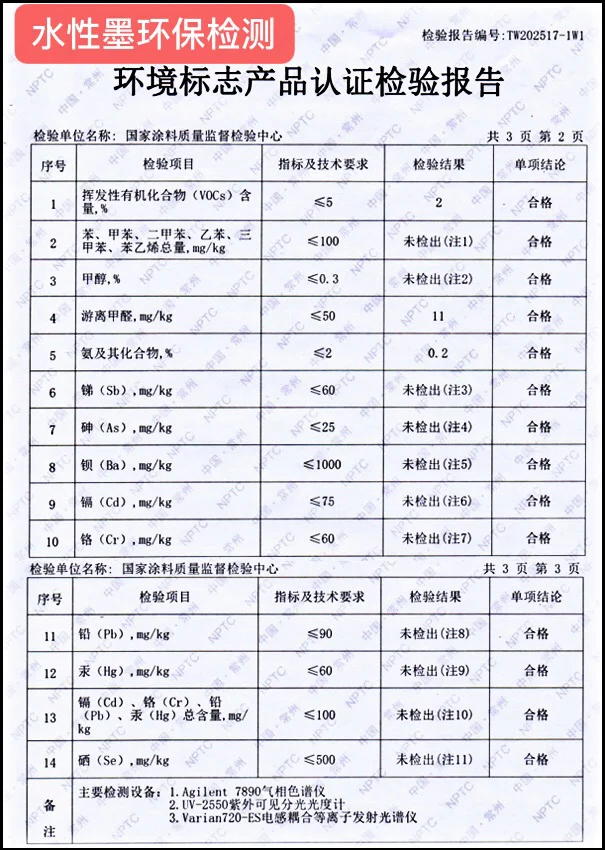
Note: the displayed report pages are excerpts provided by the company and do not replace the complete original reports.
Each stage serves the final surface quality and stable delivery.
Reference framework: U.S. EPA — Printing emissions·ECHA — REACH substances in articles
Free samples and colour cards — plus exclusive pattern development for your brand.
+86 0511-88899619